Trang

Search this Blog

Label

Hiển thị các bài đăng có nhãn sports news. Hiển thị tất cả bài đăng

4/9/10

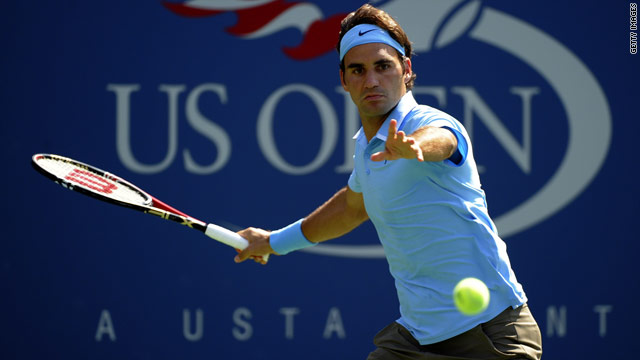
Federer, Djokovic on form at U.S. Open

(CNN) -- World number two Roger Federer continued his perfect start to the U.S. Open, brushing aside Germany's Andreas Beck 6-3 6-4 6-3 on the Arthur Ashe Center Court.
The Swiss, who won the Flushing Meadows tournament five times in a row between 2004 and 2008, is yet to drop a set at the New York event.
Last year's beaten finalist took just one hour and 41 minutes to defeat Beck and will face France's unseeded Paul-Henri Mathieu in the third round, who carded a 7-6 6-4 6-3 victory over compatriot Guillaume Rufin.
Number three seed Novak Djokovic had to contend with crowd trouble on center court to overcome Philipp Petzschner, taking the match 7-5 6-3 7-6.
The incident occurred in the eighth game of the opening set, when there was a disturbance in the stands as Djokovic was set to claim the first service break of the match.
According to the New York Times, a fight broke our between a male fan and two spectators, a woman in her 40's and an elderly man.
The row culminated with both men falling over two rows of seats before the three individuals involved were handcuffed and taken to a local police station.
The 23-year-old Djokovic noticed the incident and told the newspaper: "It was far away from the court; we couldn't really see what was going on. I hope it was no Serbian up there."
Petzschner recovered to hold his serve, but Serbia's Djokovic got his break in the final game of the set to claim a straight-sets victory.
Russia's Nikolay Davydenko was stunned by Richard Gasquet, losing 6-3 6-4 6-2 to the Frenchman, who is ranked 38 in the world.
The fifth seed is the highest placed player to be eliminated so far in New York, and he was joined by fellow seed Marin Cilic, who also tasted defeat on day four.
Number 11 seed Cilic was undone by Kei Nishikori of Japan, eventually losing a five-set epic 5-7 7-6 3-6 7-6 6-1.
In a match lasting just under five hours, Croatia's Cilic took the opening set before Nishikori leveled the match courtesy of a second-set tie break.
It was a similar story for the next two sets, with Cilic claiming a comfortable win in the third, only for world number 147 Nishikori to pick up another tie break success in the fourth before crushing his higher-ranked opponent in the final set.
There were no such problems for Robin Soderling, who swept aside home crowd favorite Taylor Dent in a 6-2 6-2 6-4 win.
The fifth seed was a man in a hurry, defeating the unseeded American in one hour and 32 minutes.
There was reason to cheer for the home crowd, with New York native James Blake advancing to the third round at the expense of Canada's Peter Polansky.
The former world number four took the match in four sets, recovering from one set down to seal a 6-7 6-3 6-2 6-4 triumph.

Klose goal gives Germany narrow victory

(CNN) -- Miroslav Klose scored the only goal of the game as Germany's exciting young side began their Euro 2012 qualifying campaign with a 1-0 Group A win over Belgium in Brussels.

Klose showed his lethal goalscoring instincts in the 51st minute when slotting the ball past goalkeeper Logan Bailly after Thomas Mueller had taken advantage of a mistake in the Belgian defence.

Despite the result, Germany are only second in the group behind Turkey, who cruised to a 3-0 victory in Kazakhstan.

France coach Laurent Blanc's first competitive match in charge ended in bitter disappointment after a surprise 1-0 Group D home defeat by Belarus at the Stade de France.

With a host of influential players not available to Blanc, the visitors snatched the points with four minutes remaining when substitute Sergei Kislyak fired home.

In the other group matches, Edin Dzeko was among the scorers as Bosnia won 3-0 in Luxembourg, while Albania snatched a 1-1 draw in Romania.

World champions Spain began their campaign in style as Fernando Torres scored twice in their 4-0 Group I success in Liechtenstein.

In Spain's first competitive match since lifting the World Cup in South Africa on July 11, Liverpool striker Torres recovered his goal touch, while David Villa and substitute David Silva also found the net.

In the night's other group match, Lithuania and Scotland played out a stalemate 0-0 draw in Vilnius.

RELATED TOPICS

* Euro 2012
* Miroslav Klose
* Jermaine Defoe
* Fernando Torres

Under-fire England coach Fabio Capello was handed a boost as his side began their qualifying campaign with a 4-0 Group G success over Bulgaria at Wembley.

Jermain Defoe scored a hat-trick and Adam Johnson netted his first international goal, although the win was marred by what appeared a serious injury to Tottenham defender Michael Dawson.

There was disappointment for England's neighbors Wales in the other group game, as Mirko Vucinic scored the only goal in Montenegro's 1-0 win.

Group C saw all three matches end in away victories with Italy being forced to recover from going a goal behind to beat Estonia 2-1 in Tallinn, the Azzurri's first success in eight matches.

The home side took a 31st-minute lead when Sergei Zenjov reacted quickest to fire home a rebound.

But two Andrea Pirlo corners early in the second half turned things around in Italy's favor.

Firstly Antonio Cassano was left unmarked to head home from 10 yards and then Leonardo Bonucci fired inom close range.

There was a surprise in Maribor where Slovenia were shocked 1-0 by Northern Ireland, for whom Manchester United midfielder Corry Evans swept home the only goal on his international debut.

And Serbia completed a good evening for the travelling sides with a 3-0 victory in the Faroe Islands with Dejan Stankovic and Nikola Zigic both on target.

In Group F, Greece fought back to earn a hard-fought 1-1 draw with Georgia after the visitors took a third minute lead through Alexander Iashvili.

But defender Nikos Spyropoulos scored his first international goal with a superb long-range strike 18 minutes from time.

In the other group match, Ivica Olic was among the scorers as Croatia cruised to a comfortable 3-0 success in Latvia.

3/9/10

Skate champions set for dream wedding on ice


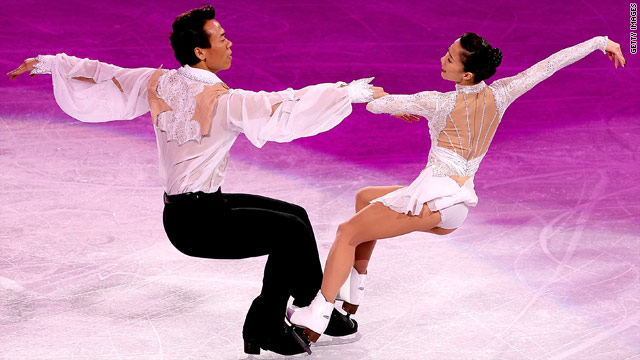
Beijing, China (CNN) -- It is a fairy tale romance of Olympic-sized proportions: China's 2010 gold medal pair skaters Zhao Hongbo and Shen Xue are getting married Saturday in front of thousands of fans -- on ice.
The wedding, scheduled to take place at Beijing's Capital Gymnasium, has been an affair three years in the making. Zhao proposed to Shen after a gold medal-winning performance at the 2007 World Figure Skating Championships.
Zhao and Shen have been skating together since 1992, and fell in love between practices and competitions around the world. After a short retirement, the pair returned to the ice to win gold in Vancouver in February, breaking nearly half a century of dominance by Russian and Soviet pairs.
Zhao and Shen, both born and raised in China's northeast city of Harbin, were legally married in China in 2007, but most Chinese do not consider a couple formally married until after a festive celebration with family and friends.
"We have been waiting a long time for this," Zhao said. "After the Olympics, we had some time to choose a place and we are so happy the time has finally come."
It won't be just any ordinary friends in attendance on Saturday evening. Taking part in the couple's wedding will be some of the world's best skating stars who have flown into Beijing to perform as their gift to the couple. 2006 Olympic champion Evgeni Plushenko of Russia will skate to "Sex Bomb" while Japan's 2010 Olympic silver medalist Mao Asada will perform a tango-inspired program.
The men's 2002 Olympic champion Alexei Yagudin of Russia and two-time World Champion Stephane Lambiel of Canada will also hit the ice with Zhao and Shen.
The newlyweds will conclude their wedding festivities with the classic "Turandot."
Perhaps the only program that might outshine Zhao and Shen will be American Johnny Weir's performance to Lady Gaga's "Poker Face," which is slated to immediately follow the wedding vows.
"So many of my fans want me to perform 'Poker Face' in China," Weir told CNN. "Yes, I am a little nervous that I am going right after because Poker Face is a little bit dirty... but I am excited by the challenge."
As for gifts, Zhao and Shen have skipped the bridal registries, saying they already have their hands full with their massive wedding. Beijing's Capital Gymnasium was decked out in sweeping red ribbons and spotlights as skaters rehearsed on Friday. Young figure skaters dressed in white lace costumes and roses waited in the wings during the rehearsal.
"We are pretty tired, very busy but excited," Shen told CNN on Friday. "It is our first time doing this type of skating so we hope it goes smoothly. We are very thankful to our friends, family and fans who will be with us tomorrow night."
The bride and groom's Olympic friends are tight-lipped about what they will give Zhao and Shen. "We have all been discussing what we will do but I can't tell you what the gift it. It's still a secret," said 2010 Olympic bronze medalist Joannie Rochette of Canada.
"I have prepared a traditional Japanese gift for them," Asada said.
Many Chinese skating fans are overflowing with excitement on the web. User Xiaoxiao on a Sina.com blog said, "Bless you two, you're always the most beautiful couple on the ice! I'm looking forward to your wedding on ice!"
But not all Chinese fans are as enthusiastic.
Others disagree with the public wedding, arguing Zhao and Shen are "using their wedding to make money" and "the wedding itself wastes a lot of money."
But overall, the skating community in China is awaiting Saturday night with baited breath.
"Back when I got married, all my wife and I had was a big family meal," the pair's long-time coach Yao Bin said. "We are very happy for them to have this opportunity to live the dream on ice."

2/9/10

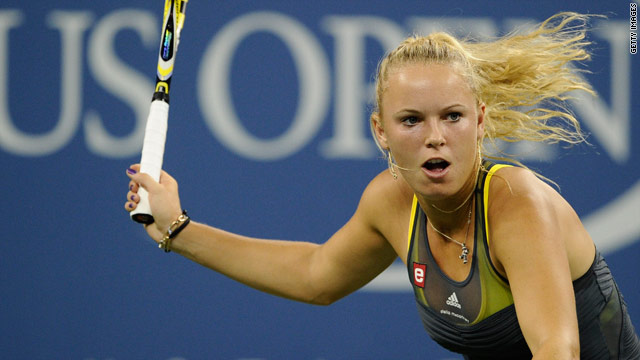
Wozniacki cruises into U.S. open second round

(CNN) -- Top seed Caroline Wozniacki eased into the second round of the U.S. Open at Flushing Meadows, by beating qualifier Chelsey Gullickson in straight sets.
The Dane, who is seeded first in the absence of the injured Serena Williams, recorded a 6-1, 6-1 victory over American wild card Gullickson, though the match ended late in the night.
The 20-year-old told the tournament's official website that she was happy with the victory: "It's a long night. The matches before on the center court were so long. But, a win is a win, so it doesn't really matter what time I get on. As long as I win, I'm happy."
Last year's beaten finalist will now face Kai-Chen Chang of Chinese Taipei in the second round.
Home hopes distant at U.S. Open
Elsewhere in the draw, Maria Sharapova fought back from one set down to defeat Australia's Jarmila Groth in three sets.
In temperatures approaching 100 degrees, the 2006 champion survived the early set-back to secure a 4-6, 6-3, 6-1 victory.
A win is a win, so it doesn't really matter what time I get on
--Caroline Wozniacki
RELATED TOPICS
Serbia's Jelena Jankovic recovered from match point down to beat world number 96 Simona Halep in a contest which lasted over two hours.
Romania's Halep served for the match with the score at 5-4 in the third and final set, but Jankovic eventually prevailed, winning 6-4, 4-6,7-5.
Eighth seed Na Li of China was the highest-placed seed to be eliminated on Tuesday, succumbing to Russia's Kateryna Bondarenko.
Bondarenko, who reached the quarter-finals of this competition last year, lost the opening set before taking the match 2-6, 6-4, 6-2.
There were no such problems for seventh seed Vera Zvonareva, who took less than an hour to dispose of Slovakia's Zuzana Kucova. Zvonareva, who won the U.S. Open doubles title in 2006, breezed into the next round with a 6-2, 6-1 success.
There was reason for the American fans to cheers on day two also, with wild card Beatrice Capra celebrating a comfortable win over Croatia's Karolina Sprem. Competing at her first grand slam, 18-year-old Capra took the match 6-1, 6-3.

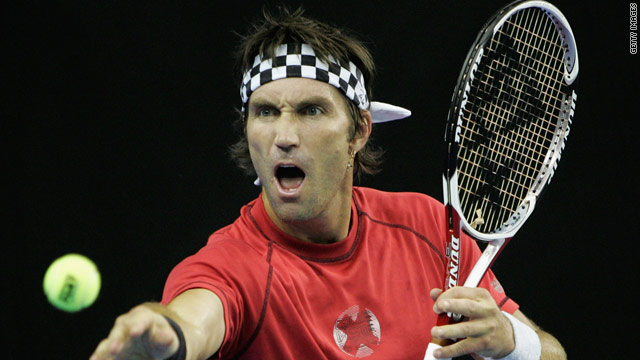
Your chance to quiz tennis legend Pat Cash

London, England (CNN) -- It is one of the most iconic moments in tennis history. A young Pat Cash clambers into the stands at Wimbledon to greet his loved ones after winning the men's singles title.
Plenty of players have followed in his footsteps since, snaking their way up to greet their family and friends above the famous SW19 scoreboard, but Cash was the first.
And now thanks to CNN, you can put your questions to one of the most recognizable faces in the game.
Why not quiz him on why he decided to embark on the 'Cash dash' or the feeling of winning Wimbledon -- the only major he managed to win during his 15-year career?
Home hopes distant at U.S. Open
Or maybe you'd like his take on the modern game. Is Roger Federer's crown slipping?
Can Rafael Nadal dominate tennis like the Fed Express did before him? When will Andy Murray win a major?
And what does he think of state of the women's game ?
All you have to do is leave your question at the foot of the page and Cash will reveal all on Friday's 1530 GMT edition of World Sport.
Cash turned professional in 1982 and the following year, at just 18, became the youngest player to participate in the Davis Cup final, winning the decisive rubber to secure the title for Australia.
At the U.S. Open in 1984, Cash lost in the semifinal to Ivan Lendl after a five-set thriller, on the same day as an epic women's final between Chris Evert and Martina Navratilova.
With John McEnroe and Jimmy Connors also contesting another five-set classic, it is regarded as one of the greatest days in tennis history and became known as 'Super Saturday.'
Cash also made the final of the Australian Open in 1987 but lost to Stefan Edberg in a five-setter, but his moment of destiny was to come at Wimbledon later that year.
He knocked out Mats Wilander and Connors en route to the final, where he beat Czech Lendl to seal his first grand slam title, and give birth to that famed celebration.
Cash was forced to retire in 1997 through injury but still occasionally turns out on the Champions Tour, as well as commentating on several tournaments throughout the year.

Robinho completes transfer to AC Milan

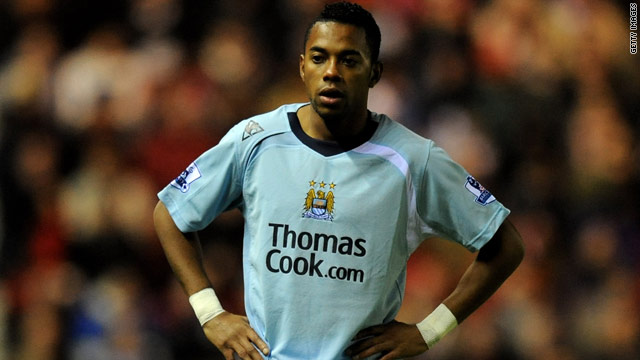
(CNN) -- Brazilian striker Robinho, the most expensive player in English football history after Manchester City paid Real Madrid 42.5 million euros for him two years ago, has joined AC Milan on a four-year contract for an undisclosed fee.
The 26-year-old became the first big-name signing in City's recent revolution, but he failed to settle in the north of England -- going back home to join Santos on loan in January before eventually leaving Eastlands on a permanent basis for the San Siro.
Robinho will link up with recent Barcelona loan signing Zlatan Ibrahimovic and compatriots Ronaldinho and Alexandre Pato in an exciting-looking forward line for the new Serie A season.
"I am really happy to be here," Robinho told Milan's official website. "I am delighted to have been given this opportunity and I want to prove my worth.
"My ambition is to play well and to help Milan regain the title," added the Brazilian, who scored 14 goals in 41 appearances for the English side.
With Robinho's arrival, Milan have allowed Klass Jan Huntelaar to leave the club with the Dutch striker signing for German Bundesliga side Schalke, as the final day of the summer transfer window saw a host of players move clubs.
Schalke have paid Milan 14 million euros for the 27-year-old, who was a member of the Netherlands squad that reached the World Cup final in Soouth Africa.
Huntelaar failed to establish himself as a regular in his one season at the San Siro following his move from Real Madrid in 2009.
"Negotiations were tougher than expected," Schalke coach Felix Magath told German newspaper Bild on Tuesday, "I am happy to have Klaas Jan. He will help us."
Huntelaar was not alone in leaving the San Siro with long-serving defender Kakha Kaladze ending a 10-year association with Milan by joining Genoa.
And striker Marco Borriello has also been allowed to move on following the signings of Robinho and Ibrahimovic, joining Roma on a one-year loan deal.
My ambition is to play well and to help Milan regain the title
--Robinho
RELATED TOPICS
Huntelaar will link up again with fomer Real Madrid team-mate Raul, who signed for the Gelsenkirchen-based side earlier in the year.
On a busy day for Schalke, they have also signed 24-year-old Spanish midfielder Jose Manuel Jurado from Atletico Madrid and Lille defender Nicolas Plestan on a three-year deal.
Elsewhere in Germany, Bundesliga leaders Hoffenheim have announced the signing of Icelandic midfielder Gylfi Sigurdsson on a four-year deal from English Championship side Reading for a fee of seven million euros.
Meanwhile, Stuttgart have announced the arrival of Italian international Mauro Camoranesi from Juventus on a one-year deal with an option for an additional year.
The 34-year-old moves on after eight seasons with the club and joins Frenchman David Trezeguet, who has joined Spanish Primera Liga newcomers Hercules, in leaving the Turin giants as coach Luigi del Neri continues reshaping his squad.
Hercules added to the signing of Trezeguet by completing the capture of Real Madrid's Dutch midfielder Royston Drenthe on a one-year loan deal.
Another player to leave Juventus is French defender Jonathan Zebina, who has joined Brescia on a two-year contract. Juve have replaced Zebina in their squad with Arsenal left-back Armand Traore, who has joined on a season-long loan deal.
In England, Sunderland have smashed their transfer record with the signing of Rennes striker Asamoah Gyan on a four-year contract.
Gyan, who starred for Ghana in the World Cup finals, has cost Sunderland 15 million euros, beating the fee paid last year for Tottenham striker Darren Bent.
The biggest domestic transfer in England saw Liverpool swoop for Fulham left-back Paul Konchesky for an undisclosed fee on a four-year contract.
Liverpool manager Roy Hodgson, who was in charge of Konchesky when he was at Craven Cottage, has allowed Finnish striker Lauri Dalla Valle and Swedish winger Alex Kacaniklic to move to London in the opposite direction.
Elsewhere in England, Birmingham City have pulled off a transfer coup by signing former Arsenal winger Alexander Hleb on a one-year loan deal from Barcelona.
On a busy day for Birmingham manager Alex McLeish, the club also confirmed the signings of Spartak Moscow's Czech defender Martin Jiranek on a one-year contract and the capture of Chile international midfielder Jean Beausejour from Mexican outfit Club America on a three-year contract.
Meanwhile, Argentine midfielder Javier Mascherano was unveiled as a Barcelona player to fans at the Camp Nou on Monday, after passing a five-hour medical at the Catalan club.
The 26-year-old had made no secret of his wish to leave Liverpool and expressed his delight at signing a four-year deal with the Spanish champions.
"When I landed, I said that I was achieving a dream. At last I will be able to say that I play for Barcelona, the team who I wanted to play for," Mascherano told the official FIFA website.
"I'm going to have the chance to play with players who I admire. This is an opportunity of a lifetime."

Vuvuzela banned from UEFA competitions

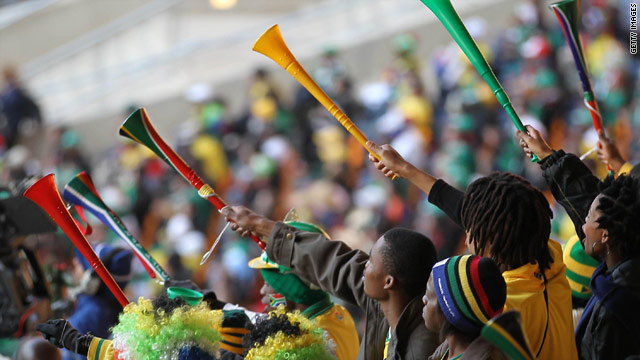
London, England (CNN) -- The drone of the vuvuzela will not be heard in any European competitions after the continent's governing body banned them from all stadiums hosting UEFA matches.
The plastic trumpets that were used by fans at the FIFA World Cup in South Africa, will be banned from the Champions League and Europa League, as well as all Euro 2012 Qualifying matches.
"UEFA has decided that vuvuzelas may not be brought into stadiums at matches in UEFA competitions," a statement on the governing body's website said.
The organization believes the instrument is integral to the football culture of South Africa, and its use in Europe would be inappropriate.
"The World Cup was characterized by the vuvuzela's widespread and permanent use in the stands. In the specific context of South Africa, the vuvuzela adds a touch of local flavor and folklore," the statement read.
"UEFA feels that the instrument's widespread use would not be appropriate in Europe, where a continuous loud background noise would be emphasized.
"UEFA is of the view that the vuvuzelas would completely change the atmosphere, drowning supporter emotions and detracting from the experience of the game."
The plastic horns have divided opinion since July's competition in South Africa, with numerous English Premier League clubs banning them from their stadiums.
Tottenham Hotspur and Arsenal were among the first clubs to issue a ban, citing irritation and safety concerns as their reasons.
West Ham have also banned the vuvuzela, stating the horns could be considered a weapon.

Tottenham seal Van der Vaart deal

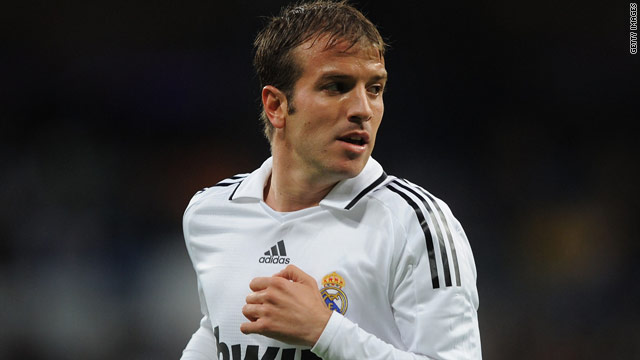
London, England (CNN) -- Rafael Van der Vaart's dramatic deadline day transfer to Tottenham has finally been rubber stamped by the English Premier League.
The Dutch international joins from Real Madrid after a technical hitch meant Spurs struggled to submit the relevant paperwork shortly before Tuesday's English transfer deadline, but the Premier League have now ratified the move.
Van der Vaart, who was part of the Dutch side that lost in the World Cup final to Spain, joins the London club for a fee believed to be in the region of $12 million.
"The interest from Tottenham came very quick and I did not have much time to think," Van der Vaart was quoted as saying on the Premier League's official website.
"But I want to play football again and if possible every week, with a beautiful club. I'm totally happy. I am excited about playing in England.
"Whether it suits my style remains to be seen, but I think a good footballer can adapt and I am very proud of this transfer."
Both clubs confirmed the deal, with Real Madrid refuting a claim from Tottenham's manager Harry Redknapp that Van der Vaart had been the subject of a $26 million bid from German champions Bayern Munich.
I want to play football again and if possible every week, with a beautiful club
--Rafael Van der Vaart
Real's sports director Miguel Pardeza told the club's official website: "It is absolutely false that Real Madrid received a 21 million euro offer from Bayern Munich for Van der Vaart.
"In fact, the German team never showed an interest to sign the player, so the allegations made in England have greatly surprised us."
A statement on Tottenham's official website read: "We are delighted to announce that we have reached agreement with Real Madrid for the transfer of Rafael Van der Vaart.
"The Holland international came through the ranks at Ajax and won two league titles during 141 appearances with the Eredivisie side, scoring 60 goals before leaving for Hamburg in the summer of 2005.
"The attacking midfielder, 27, was the Bundesliga side's leading scorer in his first season in Germany and went on to captain the side before joining Real Madrid ahead of the 2007/08 campaign.
"Rafael has been capped by Holland a total of 83 times, scoring 16 goals, since making his international debut against Andorra in 2001 at the age of 18.
"He has since represented the Netherlands at two European Championships and two World Cups, including this summer's tournament in South Africa where he featured five times in the side's run to the final."

31/8/10

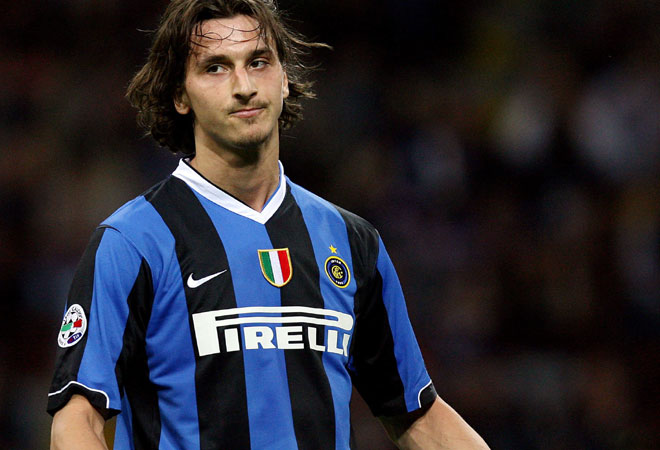
Ibracadabra!

Completely disregard my last article as it is now ancient history. The past few months I've been engulfed in a dark, ominous hole known as the Milan transfer campaign. A campaign so depressing our 'premier' acquisition was Sokratis Papastatopujdnjgnakjn & the mercurial Prince Boateng.
Galliani & co. just redeemed themselves by acquiring one of the world's premier strikers in Zlatan Ibrahimovic. How did this happen, Mr. Galliani? Only a month ago in an 'exclusive' video interview you said Milan would only buy a 'big' if they sold a 'big'. Selling Huntelaar to buy Ibrahimovic is like selling a pickle to purchase a filet mignon. The funds don't add up, but whose counting anyways? Milan now have one of the world's most feared attacking tridents.
Ibrahimovic, Pato & Ronaldinho paired up form a dynamic threesome of skill, technique, and plenty of flair. The inconsistent & overwhelmed Borriello can stop worrying about carrying Milan on his back. He had a fine display last year, but I always had my doubts if a team with Champions League trophy aspirations could really win any silverware with him leading the frontlines.
Moving on, the official deal for Ibrahimovic is as follows: He will make slightly less by earning €8 million for four years. Milan will pay a total of €24 million to Barcelona over three years, paid in various installments. I wasn't sure you could do that in soccer -- only at Best Buy when you're purchasing a brand new television. Oh well.

6 thoughts on the 2014 World Cup

The party may be raging in Spain for quite some time; but for the rest of us, the focus shifts from South Africa to Brazil, where the 20th edition of the World Cup will take place in 2014.
The fact that four years is a lifetime in soccer means that making any predictions about the next World Cup is a fool's errand. But plenty of questions have already emerged about the next incarnation of FIFA's biggest event.
1. Will the hosts be ready?
FIFA General Secretary Jerome Valcke set alarm bells jangling two months ago when he expressed concern over the lack of progress Brazil had made in improving stadiums and revamping the country's transportation infrastructure. Just last week, Brazilian Football Confederation president Ricardo Teixeira attempted to channel Chip Diller of "Animal House" fame by essentially saying "Remain calm. All is well!"
Teixeira insisted that progress has already been made on several stadiums, although concern remains over what role Brazil's biggest city, Sao Paulo, will play given that Morumbi Stadium has been taken off the list of proposed venues. Teixeira did admit that the country's airports need extensive renovation, meaning the concerns over Brazil's readiness won't abate any time soon.
2. What about the home team?
Consecutive appearances in the quarterfinals would be cause for celebration in some countries. Not in Brazil, where getting bounced in the final eight in both 2006 and 2010 is considered abject failure.
Given the talent the Seleção possesses, there's reason for such an assessment, but just as big a concern is the kind of team they've become. Spain has replaced Brazil as the keepers of the beautiful game, while Brazil has become a counterattacking side. Granted, it was a style Brazil implemented quite effectively during much of the just-completed World Cup cycle, but there is mounting sentiment that the team should return to its roots and seek to carry the initiative to its opponents.
Another concern is how sharp the team will be in 2014, given that, as hosts, it will not have to go through qualification. It's a difficult task for whoever replaces deposed head coach Dunga. Former World Cup winner Luiz Felipe Scolari has taken himself out of the running, at least for the moment, leaving Corinthians manager Mano Menezes, Fluminense head coach Muricy Ramalho, and former AC Milan head coach Leonardo among the remaining candidates.
3. Can Spain repeat?
Despite its undeniable talent, the odds of Spain claiming the 2014 crown are slim. One need only look at how 2006 champion Italy struggled in this tournament to see that remaining on top of soccer's summit is notoriously difficult. Not since Brazil in 1962 has there been a repeat champion, and the Seleção is also the only team in modern times to come close, reaching the final in 1998 after prevailing in 1994.
So how is Spain stacking up going into the next cycle? There remains an impressive core of young players around which to build. Defenders Gerard Piqué and Sergio Ramos, along with midfielders Cesc Fabregas and David Silva are all currently under the age of 25. World Cup final hero Andrés Iniesta is only 26, as is forward Fernando Torres.
Some turnover will inevitably occur, however, with Carles Puyol, Xabi Alonso, Xavi, and David Villa all likely to be replaced. Fortunately for Spain, qualifying for Euro 2012 is set to begin in August, meaning La Furia Roja will have plenty of time to break in new players.
4. Whither Diego?
Say what you will about the Argentine's tactical acumen and overall lack of coaching experience. Clearly the World Cup would be a much duller place without Maradona around. And the national team job seems a perfect fit for the former World Cup-winner's hyperkinetic personality.
But Maradona is mulling over whether he should return. Even if he does decide to carry on, the death march that is COMNEBOL qualifying, even without Brazil, means there's no guarantee that he'll remain in charge for the entire World Cup cycle.
Much will depend on next year's Copa America. If Argentina performs well, Maradona will likely be on the sidelines in Brazil. If not, he could very easily see his support evaporate. Here's hoping that Maradona -- and his eccentric press conferences -- stick around for four more years.
5. Can Europe's recent World Cup stranglehold be broken?
For the first time in World Cup history, a European side triumphed outside of its continent. And in the last two tournaments, seven of the eight semifinalists have come from Europe. Granted, part of this is down to sheer weight of numbers; UEFA has more than twice as many representatives as the next biggest confederation. Europe didn't have it all its own way either, as all five of South America's representatives reached the knockout stages. But with a respectful nod to Uruguay, there's also no doubting that the Netherlands, Spain, and Germany played the best soccer in the tournament.
So will a non-European team prevail in 2014? Such hopes rest primarily on South American sides, which will have the home-continent advantage. That said, Africa proved this time around that playing at home is not a guarantee of success.
6. Will FIFA finally adopt goal-line technology?
Much like that renowned seer, the Magic Eight Ball, might say, "Signs point to yes," Valcke told Sky Sports News that there was "a real chance" that a system could be in place by the 2014 tournament. While this won't happen soon enough to placate England fans still bitter over Frank Lampard's disallowed goal against Germany, it will at least reduce the odds of it happening again.
And while FIFA is at it, the organization could be proactive for once and remove the utterly ridiculous "drawing of lots" as one of the tiebreakers for progressing from group play. It doesn't matter what criteria it decides to use, be it corners, Fair Play standings, or a specially arranged penalty shootout (think of the ratings). As long as it has something to do with that happened on the field, fans will be okay with it.
There was a time during this World Cup when it looked like the "drawing of lots" tiebreaker might be necessary. And while it remains the case that it has never been needed at the finals, keeping it around seems to be tempting the soccer gods too much, allowing for the possibility that FIFA's most prized asset would turn into a farce.
Jeff Carlisle covers MLS and the U.S. national team for ESPNsoccernet. He is also the author of "Soccer's Most Wanted II: The Top 10 Book of More Glorious Goals, Superb Saves and Fantastic Free-Kicks." He can be reached at eljefe1@yahoo.com.

10 takeaways from the World Cup

OK, so it isn't over yet, but before the final vuvuzela blows Sunday, here's what we can take away from this tournament in which favorites went home early (and in bulletproof cars), superstars discovered love children, and an octopus was hailed as a genius.
1. Spain showed us how to counter the counterattack
Jogi Low's lucky periwinkle sweater didn't stand a chance. In a game of "now you see it, now you don't," Spain whistled the ball around the park at a hypnotic pace -- forward, sideways, backward, forward, sideways, backward, you are getting sleepy -- and waited for the inevitable opening to come. The players would still be out there pinging it about in their "passing carousel," as Sir Alex Ferguson refers to Barcelona's one-touch triangles, if Carles Puyol hadn't grown impatient and catapulted himself into the air to spear a ferocious header into the net. (By the way, Carles, Gene Simmons called. He wants his hair back.)
Then, after all that metronomic passing, the goal comes from the most elemental of soccer plays: a set piece. It's this kind of dual threat that will give the Dutch nightmares. Spain not only dismantled the confident, high-octane Germans but it did so in a style that could be best described as "possessed." The Spaniards held on to the ball as if it were the Rimet trophy itself, with Xavi and Andres Iniesta finding spaces that are not readily apparent to the human eye. And they did it while using their third or fourth different formation of the tournament.
Spain could even afford to leave struggling starlet Fernando Torres on the bench, using sprightly Barca forward Pedro on the right side of midfield. La Furia Roja's versatility and industry took awhile to emerge from their chrysalides after that shocking opening defeat to the Swiss (the Swiss!). Now the Spanish are playing at their highest gear and Low is right to call them "the best team in the world." Although the Netherlands might have a thing or two to say about that.
2. The Dutch don't need to play Total Football to total you
The Netherlands has, so far, looked like a prosaic shadow of its former swashbuckling self, yet it's one very important win from changing the national psyche. With two lost finals ('74 and '78) and one flameout ('98 semis), the label of "Big Game Choke Artists" could finally be laid to rest. The Total Football glory days of Cruyff-inspired magic are as far removed from this Dutch side as is the requisite pregame frolicking in hot tubs with female fans.
The Oranje don't even have the panache of the Euro-winning Van Basten/Gullit/Rijkaard juggernaut of 1988 or the kind of Dennis Bergkamp genius that lit up their '98 World Cup run. But maybe the soccer gods have decided to reward the Netherlands for its life-affirming body of work because how else do you explain Wesley Sneijder and Arjen Robben, a couple of talented munchkins by modern-day standards, scoring goals with their gleaming heads and why 35-year-old goal-shy defender Giovanni Van Bronckhorst is launching surface-to-air missiles from somewhere near the Cape of Good Hope.
Even with the Netherlands' affinity for theatrics, hissy fits and the flying leg whips of Mark Van Bommel and Nigel De Jong, there's a feeling of destiny with this team. It's as if the Dutch realize that it's their responsibility to finally shuck off the weight of being the Best Team Never to Win the Cup and are prepared to do what it takes -- even if that means abandoning their legacy.
3. If you want to win the World Cup, don't play in the EPL
Heading into the semifinals, there were just seven card-carrying English Premier League players left from the staggering total of 117 that began the World Cup. I don't buy the excuse that the brutal EPL/Champions League/Europa League schedule left the players too jaded. Just look at the Bundesliga, where the entire electrifying German squad plies its trade. The German season is just as long as England's and Bayern Munich went all the way to the Champions League final with four of its stars -- Robben, Van Bommel, Philipp Lahmand Bastian Schweinsteiger -- displaying no apparent signs of fatigue in the World Cup.
Inter Milan, the team that beat Bayern in the Champions League final, sent almost its entire starting lineup to the World Cup, including Dutch firebrand Sneijder, who has led the Netherlands into the final for the first time since 1978. And is there a better World Cup feeder club than Barcelona, with seven of its players making up the core of the Spanish side? Arguably the biggest flops of the Cup have been Wayne Rooney and Nicolas Anelka. Remind me: Where do they play their club ball?
If anything, the EPL is just a tougher, more physical league, but hurly-burly doesn't necessarily translate into quality -- or World Cup success.
4. The U.S. isn't a superpower -- yet
Once again, the World Cup proved that Americans are catching up to the rest of the world when it comes to maniacal fans, near-homicidal outrage over blown calls and creating "remote offices" in local pubs around the nation.
That said, the U.S. won only one game. Against Algeria. In the 94th minute. It lost to a Ghana team ranked about 20 places lower in the world rankings. That might have been enough for a lovefest from David Letterman and Jon Stewart, but perhaps the U.S. can aim a little higher next time and lure Oprah out of retirement in four years -- or at least Larry King.
Making the knockout rounds no longer should be cause for celebration in the U.S. but rather should be an opportunity to explore why the team didn't get further. After all, if the Germans could rebuild a program that won three World Cups from the ground up, maybe it's time for Sunil Gulati, president of the U.S. Soccer Federation, to pull on his lederhosen and find a new mountain for the U.S. to climb. We need a national team structure that fosters technical development (rather than trophy accumulation) at the youth level, coherent scouting (i.e., integrating Hispanic talent into the pool), and a well-organized feeder system that allows for top U.S. players to hone their games overseas.
Until the U.S. does what every soccer-playing nation does at some point -- import coaching talent with World Cup pedigree -- it's forever destined to play in the margins, and we'll have to be content with the occasional shocking result, such as beating Spain in the Confederations Cup or taking a point from England in the group stage. The U.S. should be capable of ratchetting up the level in 2014 and beyond. But it's not going to happen by just going on late-night talk shows.
5. The Jabulani is just a soccer ball with dimples
As much as Robert Green and Julio Cesar would like to blame adidas' scientists for their career implosions, it's not the ball but shoddy technique that turned them into flailing jokes. Just another case of poor workmen blaming their tools; anyone who claimed that the reason there were so few long-range goals in this World Cup was thanks to the dipsy-doodle swerves of the Jabu should be sentenced to a lifetime of watching the YouTube video of van Bronckhorst's 41-yard unmanned drone that screamed on a straight line into the intersection of the post and upper 90. Or Japan's free-kick wizardry against Denmark. And if the ball is so difficult to strike accurately from distance, how did Diego Forlan, who curled in a trifecta of free kicks, become the first player in 20 years to score three goals from outside the box?
6. "Goal-line technology" needs to be more than an annoying catchphrase
Referees blew all sorts of calls this summer, their screwups more irritating than anything involving Heidi and Spencer. These flashpoints serve as an ode to the broken-hearted: Argentina's egregious opening goal against Mexico, Spanish players encroaching the penalty area on Paraguay's spot kick, Frank Lampard's not-so-phantom "goal" against Germany, and, of course, Maurice Edu's "offside."
Sepp Blatter, FIFA president and king of looking the other way, softened his hard-line stance on computer-aided refereeing in the sport, though you get the feeling he's only pandering to the media. The U.S. will win back-to-back World Cups before FIFA acknowledges a flaw in its grand design.
7. However, we don't need instant replay
Call me a sadist, but on a personal level, the drama and emotion of Edu's disallowed goal against Slovenia proved why the game should stand as it is currently laid out. Camera angles don't necessarily tell the whole story -- Seen the Zapruder footage recently? -- although the technology would surely get abused by fear-struck refs who would second-guess their decision-making thanks to the eye in the sky.
In the modern, tactics-dominated game where, thanks to massed defenses, goals are so precious -- there's been an average of only 2.24 per game in this tournament -- it's important that we count all the legitimate ones. But although it's one thing to have technology to determine whether the ball crossed the plane, that's where we have to draw the line, so to speak. In other words, no instant replay for offside calls, thank you very much.
The outrage I felt at the end of the Slovenia game reminded me why I love soccer so much over the stutter-start NFL or America's pastime, which takes longer to watch than the "Lord of the Rings" trilogy. Getting every decision correct is boring (just ask Congress). I'd much rather feel burning anger or righteous indignation during a World Cup than nothing at all.
8. You can't be both a cheat and a hero
Luis Suarez had a reputation-enhancing World Cup until he stuck out his hand and became the spawn of Satan for denying Ghana, the darling of the tournament, its rightful place in the semifinals. Even though Suarez did what just about any soccer player in his position would have, he made the mistake of not showing any remorse when Asamoah Gyan's penalty kick clanged off the crossbar and Uruguay went on to win the game. Instead, he acted as if he had just scored the winning goal of the World Cup final, allowing his teammates to parade him around the field on their shoulders. Although karma caught up to Los Charruas in their defeat by the Netherlands, Suarez's postgame bravado turned a simple act of gamesmanship into a morality play. He now gets a starting spot on the All-Hands Team lineup, joining Diego Maradona, Thierry Henry and Paul the oracle octopus.
9. Well, you can be if you're Diego Maradona
The Argentina manager's transformation from porcine, drug-addled cheat to lovable, dapper guardian of Joga Bonito has been nothing short of remarkable. We remember the qualifying campaign, full of trademark Diego volatility: running over a photographer's foot with his car, vile tirades at journalists and the pretournament whimsy of demanding state-of-the-art bidets in his hotel suite. Those of us expecting men chasing after him with a big butterfly net in South Africa were dead wrong. Maradona was all sweetness and light, coaching the Albicestes in his own freewheeling, attack-happy image until it all unraveled against Germany and he went back to looking like a man whose tactical acumen seemed to consist of wearing the same suit and grasping the same rosary beads.
Sure, his game plans were naive, but his passion for the job was infectious. Every player got a hug and a kiss postgame regardless of the result, and the media embraced him in a similar way, forgiving his career transgressions and scraggly facial hair. Perhaps it's because Maradona had been usurped in the shame department by Suarez, or maybe he's no longer the same maniac we once knew and secretly loved. Now, the Argentine players, including Lionel Messi, with whom he has endured a difficult relationship, want him to stay. No one expects to see Maradona coaching in 2014, but we can surely hope.
10. Countries should hold national inquiries into their soccer teams before the World Cup
Although France and Nigeria provided plenty of entertainment off the field, they'd have been better served on it by leaving their farcical talents at baggage check. Newly elected Nigerian President Goodluck Jonathan went so far as to withdraw the Super Eagles from international competition for two years after the team flamed out -- only to have the bad luck of receiving a FIFA threat to wipe them off the face of the soccer map. Meanwhile, French President Nicolas Sarkozy demanded that outgoing clownish manager Raymond Domenech testify before a closed-door meeting of the National Congress to explain why Les Bleus brought dishonor to their country. He even rescheduled policy meetings to rendezvous with Thierry Henry, one of the leaders behind the team mutiny. After a long and mostly glorious career in Europe, Henry is expected to retire -- sorry, I mean play -- for the Red Bulls, and Sarkozy's last words to him were reportedly, "Here's your chapeau, what's your hurry?"

Is the tide turning for U.S. soccer?


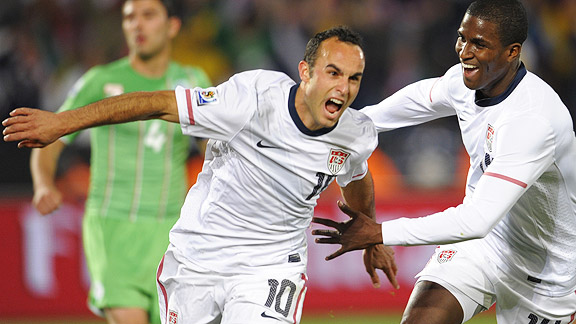
JOHANNESBURG -- When U.S. midfielder Landon Donovan scored his dramatic stoppage-time winner against Algeria, a goal that clinched the Americans' passage into the second round of the World Cup, it sparked raucous celebrations all over the country.
But amid the numerous YouTube videos of euphoric fans engaging in giant group hugs, the inevitable question arose: Will the team's performance push soccer into becoming a major force in the U.S., or will it sink back into its niche status until the next World Cup comes around?
That the U.S. team's exploits were a major stepping stone in the growth of soccer was evident beyond the YouTube tributes. The Americans' subsequent second-round matchup against Ghana drew a combined English and Spanish language television audience of 19.4 million people. Not only was that a record for a soccer game in the U.S., it was bigger than the average audience for a game in last month's NBA Finals.
"This World Cup has totally broken through, where our national team sort of became America's team," said Don Garber, the commissioner of Major League Soccer. "It's resonated more than the interest that Americans have with a great individual swimmer like Michael Phelps or a great skier like Lindsey Vonn. This is America's team and almost 20 million people got behind that team."
In many respects, the U.S. side was an easy team to like. The makeup of the squad was more ethnically diverse than previous incarnations, debunking the stereotype that soccer is a sport only for white suburbanites. On the field, the U.S. won its World Cup group for the first time in 80 years, delivering stirring comebacks in the process.
"This was a quintessentially American team," said Garth Lagerwey, the general manager of current MLS champion Real Salt Lake. "There's nothing more American than scrapping and fighting and clawing your way and rallying and never giving up. Those are qualities that lots of people can identify with."
Of course, the reality is that the passion for soccer has been germinating in the U.S. for a while. There are three television channels dedicated to soccer. MLS has been growing at an impressive rate and is set to expand to 19 teams in 2012. Exhibitions by foreign clubs continue to draw big crowds. When the World Cup hit with its drama, passion and controversy, it all amounted to something of a perfect soccer storm. As Garber put it, "All of those things came together to create excitement that was just unprecedented."
Yet ask any high-level soccer executive if the U.S. performance amounted to a tipping point of sorts for the sport, and an air of caution immediately enters the conversation. For all the flag waving that took place during the World Cup, the task of growing soccer in the U.S. remains what it always has been: a long, hard slog in crowded sports marketplace.
"I have long since given up on finding one single moment, or one single answer," said Kevin Payne, CEO of MLS side D.C. United. "This is a long process, becoming a world-class soccer nation. And the steps you take now in some ways become less dramatic. Now it becomes incremental and in some ways probably harder to move up to the next level of where we'd like to be."
A look at American soccer history shows numerous turning points. Hosting the1994 World Cup raised the interest level considerably, and the profits generated helped launch MLS in 1996. This foundation helped the national team by vastly increasing the pool of potential players, and in 2002 the team enjoyed its best World Cup performance in the modern era, reaching the quarterfinals courtesy of a memorable second-round win over bitter rival Mexico. In between there was the advent of the women's game along with national team's Olympic and World Cup triumphs.
That doesn't mean MLS and the U.S. Soccer Federation won't try to squeeze every last ounce of growth from the buzz that has been generated. There haven't been many times when the U.S. men's team has created positive World Cup memories, and the game's leaders recognize how rare an opportunity this is.
"Don't expect sold-out stadiums [a month] from now, but I think we're going to have a much bigger affect than we might have, say, coming out of an Olympics, I think we're going to see some uptick," said USSF president Sunil Gulati. "Part of that will be red, white and blue, but part of that will be the sport, and the sport part is what we've got to capture. We can't do anything about the nationalism. But I think we'll get some powerful effects."
In a bid to keep the national team in the public eye, the USSF has scheduled a high-profile friendly against Brazil on Aug. 10.
In MLS, French striker Thierry Henry is reportedly on his way to the New York Red Bulls, and Garber indicated that the league is poised to sign several more international stars. MLS will also try to maximize the presence of American World Cup players plying their trade stateside, with Donovan remaining the face of the league. Then there is the follow-up from the promotional programs that various MLS teams engaged in during the tournament.
"Harnessing that momentum on a week-to-week basis is obviously something we're very focused on," said Garber. "But it is more of a long-term project as opposed to something that we're expecting an immediate bump from."
Among the long-term objectives is improving the country's player development program. The USSF has formed what it calls the Development Academy, a national youth league composed of 77 clubs fielding teams at the U-16 and U-18 age levels. Every MLS club is participating as well, allowing youth players to graduate into the professional ranks. Former U.S. international Claudio Reyna was recently put in charge of a project to revamp the youth system at younger age levels with an emphasis on coaching education.
All of these initiatives are aimed at addressing what for Garber is the considerable challenge of making the level of play and the level of pay high enough to keep the best American players at home.
"I do believe that when we've reached that tipping point, whenever that tipping point is, it will be because most if not all of the top American players will be playing in MLS," said Garber. "And the only ones that won't be will be Messi-like superstars who are with super-clubs like FC Barcelona, Manchester United and Real Madrid."
In the meantime, the challenge of growing soccer in the U.S. continues. It's a task in which considerable progress has been made, but there are no shortcuts.
"I've never viewed [growth] as inevitable," said Gulati. "Not when Pele said it, not when David Beckham showed up, not when we hosted the World Cup. It's a long plan."
Garber added, "The water is rising, and we're a boat on that rising tide. We just need to be sure that we can connect the dots between all those other boats that are on the scene; people that care about the World Cup, people that care about the U.S. team, people that are excited about teams from their home country."
If that happens, then perhaps more U.S. World Cup celebrations will be in the offing.
Jeff Carlisle covers MLS and the U.S. national team for ESPNsoccernet. He is also the author of "Soccer's Most Wanted II: The Top 10 Book of More Glorious Goals, Superb Saves and Fantastic Free-Kicks." He can be reached at eljefe1@yahoo.com.